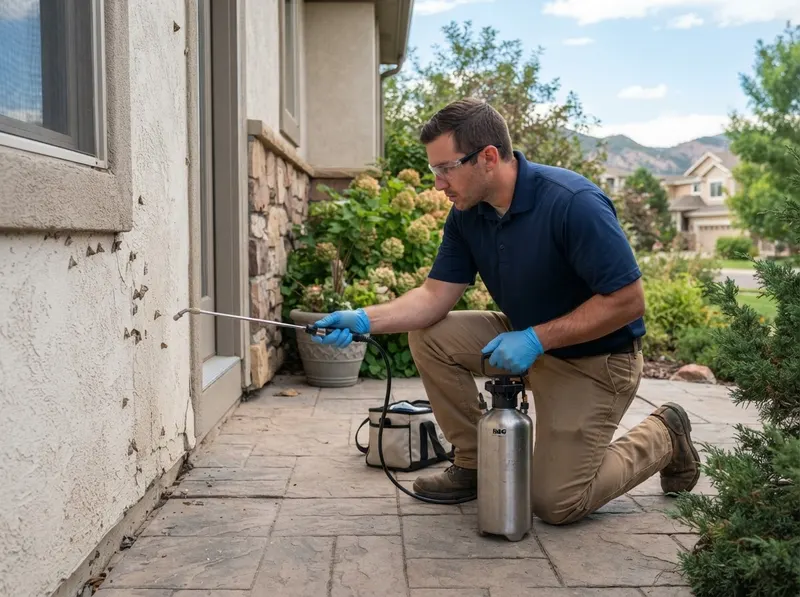
Seasonal pest pressure along the Colorado Front Range follows strict elevation and meteorological triggers. In late spring, army cutworm moths migrate westward from agricultural plains toward the subalpine zones of Pikes Peak and Cheyenne Mountain, sheltering in architectural gaps, soffits, and window frames during daylight hours. Foothill communities like Rockrimmon, Peregrine, and the Broadmoor experience high moth densities due to dense pine canopies and rapid elevation transitions, while eastern neighborhoods such as Stetson Hills and Briargate encounter wind-driven dispersals along open corridors. Effective control relies on sealing primary intake gaps before daytime resting begins, rather than broadcast interior spraying, which leaves insect carcasses behind baseboards and invites secondary dermestid carpet beetle infestations.
Treatment applications target the physiological vulnerabilities of seasonal invaders without unnecessary chemical loading. Microencapsulated pyrethroid suspensions applied to exterior door casings, foundation perimeters, and shaded eaves create an invisible contact barrier that neutralizes boxelder bugs and conifer seed bugs before they penetrate siding seams in early autumn. In historic districts like Old Colorado City, older masonry structures feature exterior lime-mortar voids and unsealed sill plates that require physical backer-rod insertions and polyurethane sealant rather than simple barrier sprays alone. Newly constructed residences in Flying Horse frequently feature recessed patio lighting and expansive soffit vents, which pull migrating moths toward interior entry points unless exterior light spectrums shift to yellow sodium-vapor wavelengths and vent screening reduces to 20-mesh or finer.
Choosing targeted seasonal management over a generic monthly pest program reduces total chemical volume while addressing specific life-cycle windows. A standard monthly service treats general crawling insects at the soil line, which fails to intercept aerial migrants settling high in roof peaks and rain gutters. The trade-off for seasonal invader management is timing precision: exterior exclusion and barrier treatments must occur within the specific 2-to-3-week migration wave, typically mid-May to late June for miller moths, and late September for overwintering seed bugs. If property owners miss this pre-entry window, structural treatment shifts toward physical HEPA-filtered vacuum extraction from attic voids and interior light fixtures to prevent insect debris accumulation.