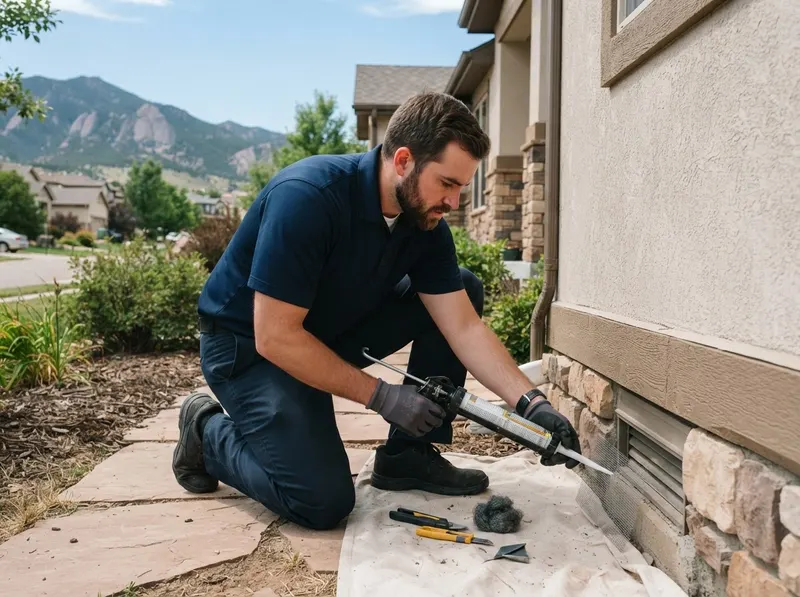
Rodent control in the Colorado Springs region requires structural modification rather than simple bait placement due to high local populations of deer mice, which act as primary carriers of Sin Nombre hantavirus in El Paso County. Homes constructed along native brush ecotones in neighborhoods such as Peregrine, Rockrimmon, and Cheyenne Mountain frequently encounter rodents migrating down from mountain scrub oak when outdoor temperatures drop below 40 degrees Fahrenheit in late autumn. Physical exclusion seals openings greater than 1/4 inch around foundation sill plates, utility penetrations, garage door weatherstripping, and roof return valleys. Standard foam sealants fail because rodents gnaw through cured polyurethane within hours; exclusion protocols require steel barrier cloth, 1/4-inch galvanized hardware wire, and sheet metal barriers to stop re-entry.
Abatement protocols isolate the internal population without creating secondary odor hazards or non-target wildlife poisoning risks. In established foothill neighborhoods like Broadmoor or the historic stone-foundation properties of Old Colorado City, rodent exclusion targets crawlspace vents, masonry gaps, and chimney step-flashing. If an infestation involves attic contamination, mechanical snap traps and multi-catch chambers are mapped and serviced inside the structure, while exterior bait stations remain anchored to foundation perimeters to suppress outdoor colony pressure. If a structure has existing droppings, wet-cleaning techniques with EPA-registered disinfectants replace dry sweeping to prevent aerosolizing pathogen spores.
Property construction dictates the timeline and complexity of structural exclusion. In master-planned developments like Briargate, Stetson Hills, and Flying Horse, stucco weep screeds along foundation edges provide direct entry when expansion joints loosen or grade levels rise too high against the foundation. A standard chemical treatment plan provides temporary suppression for 30 to 60 days, whereas permanent hardware exclusion provides long-term structural defense. The operational trade-off centers on upfront labor: mechanical repair involves thorough ladder inspection and manual architectural retrofits, whereas ongoing bait maintenance requires recurring service visits without addressing perimeter vulnerability. Structural repairs hold a minimum threshold of $150 for inspection and minor entry-point closure.